 Latest · Capitals Wire
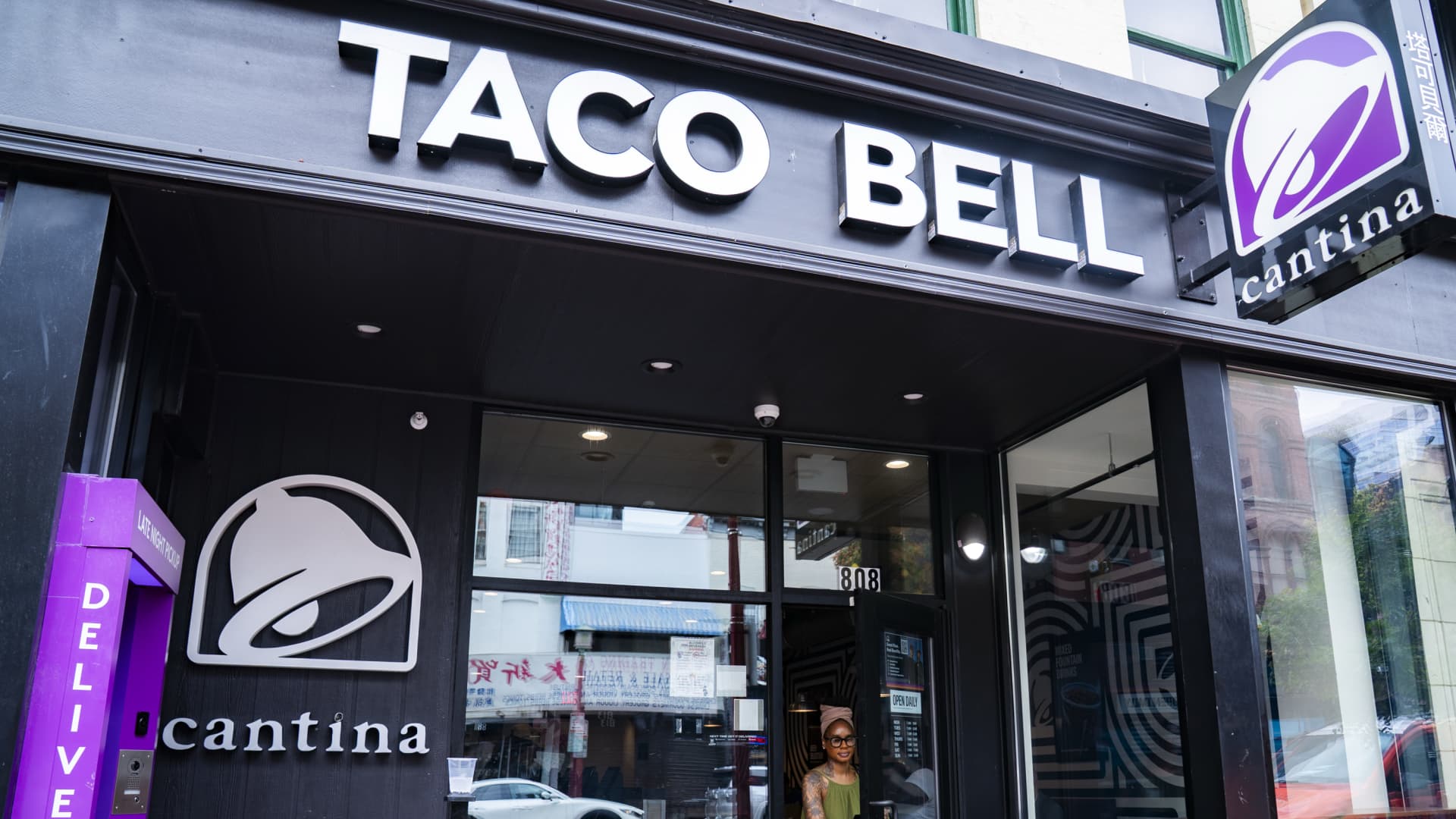
A woman leaving Taco Bell on July 28, 2026, in Washington,DC. The Washington Post | Getty Images Yum Brands on Tuesday reported earnings that beat expectations, but a cyclospora outbreak linked to iceberg lettuce at Taco Bell weighed on the company's same-store sales growth. However, Yum said Taco Bell, which the company considers a "growth engine" for its business, has since rebounded.
"Since the end of September, Taco Bell U.S. has been outpacing the [quick-service restaurant] industry on same-store sales growth," Yum CEO Chris Turner said in a statement. Shares of Yum rose more than 3% in premarket trading. Here's what the company reported compared with what Wall Street was expecting, based on a survey of analysts by LSEG: Earnings per share: $1.56 adjusted vs. $1.49 expected Revenue: $2.05 billion vs. $2.05 billion expected Yum reported fiscal third-quarter net income of $1.62 billion, or $5.92 per share, up from $397 million, or $1.41 per share, a year earlier.
Excluding gains from its divestiture of Pizza Hut and other items, the restaurant company earned $1.56 per share. Net sales rose 4% to $2.05 billion. During the quarter, Yum completed its divestiture of Pizza Hut.
It closed the sale of the pizza chain's business in mainland China to Yum China on Aug. 7 and sold the rest of Pizza Hut to LongRange Capital on Sept. 1. The company's third-quarter results include Pizza Hut up until those dates. Excluding Pizza Hut, Yum's same-store sales were flat for the quarter as Taco Bell weighed on the company's overall results.
Taco Bell's same-store sales declined by 4% as diners temporarily pulled back on visits due to the foodborne illness outbreak . Yum executives previously said the weekend of July 18 saw the most severe impact to sales, but sales trends have improved since then. Outside of the U.S., Taco Bell's much smaller international business reported same-store sales growth of 5%.
KFC's same-store sales ticked up 1%, helped by system sales growth in China and Europe. The U.S., now the chicken chain's third-largest market, saw system sales shrink 6% in the quarter. Like Restaurant Brands International's Popeyes , KFC has struggled in the U.S. amid a wave of new competitors and more budget-conscious consumers.
Source: CNBC